A Weekend in Weimar with Your Family: What Delights Kids and Teenagers
Two days in Weimar with children and teenagers: porcelain bells, a park ruin, Schiller's kids' audio tour, the City Palace and the Bauhaus Museum. My route plan for families.

Weimar has a reputation as a city for educated adults. That is only half true. The old town is small, almost everything is close together, and many stories work just as well for eight-year-olds as for sixteen-year-olds, only with a different punchline. Here is my suggestion for two days, each with something for the younger ones and something for the older ones.
Saturday morning: around the market square
Start on the market square. The town hall tower holds a carillon of 35 bells, and they are not made of metal but of porcelain. For children that sentence is already enough: the bells are made of the same material as a coffee cup.
Right next to it is the Bach organ listening station. If you want to hear the music, you have to pedal to generate the power. It costs nothing and even teenagers enjoy it once they start pedalling. Johann Sebastian Bach lived in this quarter, at Markt 16. He had 20 children in total, six of them born in Weimar. His household was a mix of family and music school.
The older ones get the better story: in 1717 Bach wanted to quit because he had a better job offer elsewhere. His duke said no and had him locked up for four weeks. Handing in your notice as a criminal offence, you do not have to explain that to teenagers for long.
From here it is only a few minutes to Platz der Demokratie. Anna Amalia was a widow at 18 and ruled an entire duchy. Ask your children what they would have done first. The Duchess Anna Amalia Library behind it burned on 2 September 2004. People formed a chain and passed the books out into the open hand to hand. You can only see the Rococo Hall with a timed ticket, so book ahead if you want to go in.
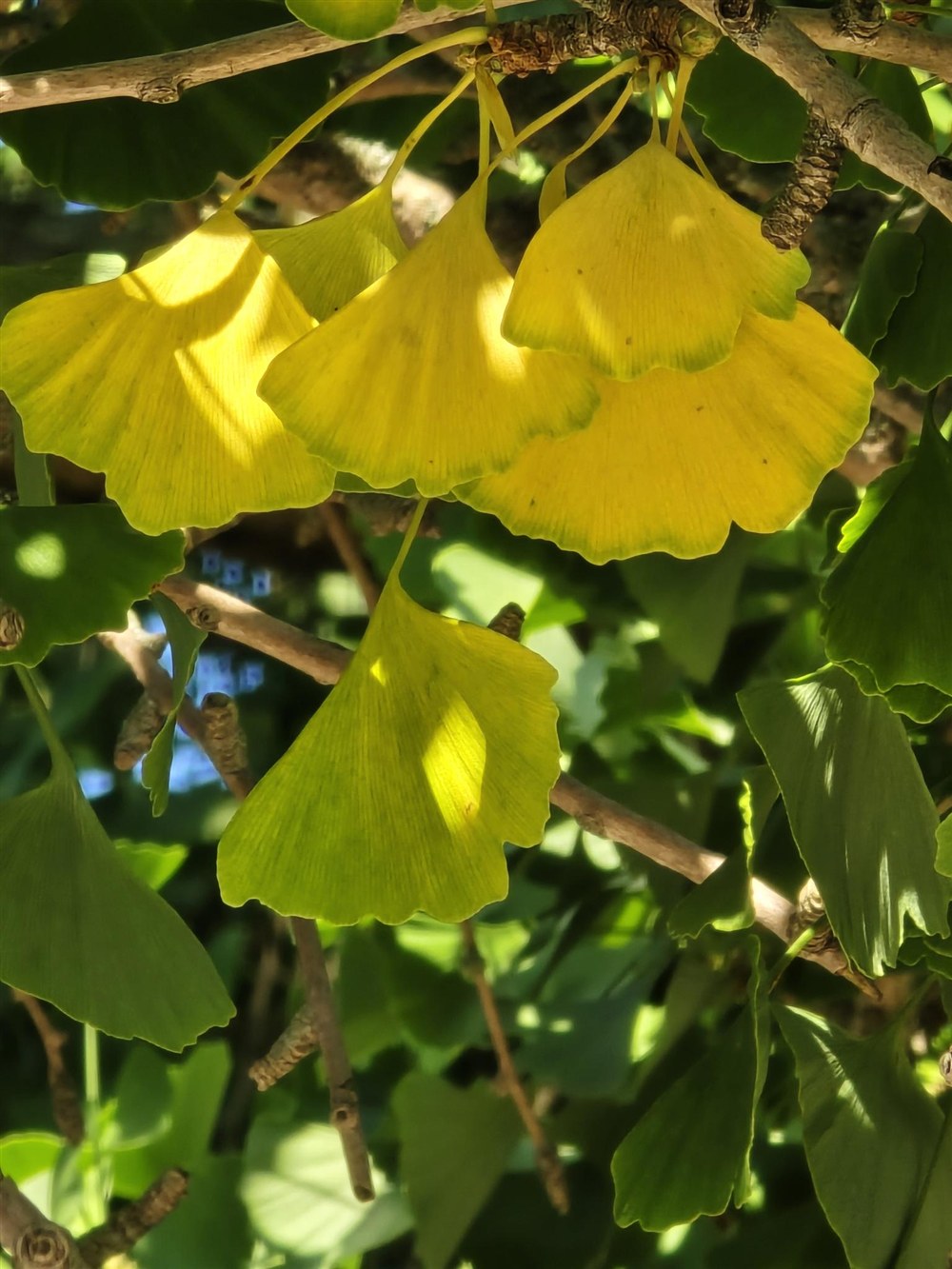
On the way back, the ginkgo tree is worth a stop, just a few steps away. Look for a leaf: it is split in the middle. In 1815 Goethe sent a leaf like this in a letter to Marianne von Willemer and wrote a poem about it. The ancestors of the ginkgo grew about 280 million years ago, and the leaf has barely changed since.
Saturday midday: picnic in the Park an der Ilm
Lunch belongs in the Park an der Ilm. 58 hectares, a UNESCO World Heritage Site and enough meadow that nobody has to sit still. From a viewpoint above you can see Goethe's garden house. His sovereign Carl August bought it in 1776 and gave it to him so that he would not move away again. Children usually ask whether they would live here. The answer is more honest than you might think.
Only a few metres further on is the Tempelherrenhaus, a real ruin in the middle of the park. It was destroyed in the war and is quiet and a little mysterious today. Children see a castle ruin, teenagers get the story behind it: from 1919 the Bauhaus teacher Johannes Itten had his studio here and had his students do breathing exercises every day, part of a life-reform movement of the time. The ruin also appears on the cover of Moby's single "The Right Thing".

Saturday afternoon: Schiller's house and a tower with cannons
This afternoon is about Schiller's house, as the one house you visit from the inside. Goethe's house on Frauenplan is closed from 2 November 2026 for renovation (more under practical tips), while Schiller's house stays open. It is simpler and easier to take in, and that is exactly an advantage with children. For them there is a kids' tour of its own, an audio guide with 14 stops that accompanies them through the house. Ask at the ticket desk how to get it, or check the Klassik Stiftung website beforehand. It is just right for children because they do not stand quietly in front of display cases but have something to discover from stop to stop.
Tell the children that Schiller is said to have kept rotten apples in his desk drawer because the smell helped him write. That is a tradition, but a good one. Teenagers prick up their ears at a different story: in 2008 a DNA analysis showed that the bones in Schiller's official coffin are not his at all. Where he really lies, nobody knows to this day.
Goethe's house is only two minutes away, and its stories can also be told outside. His bed was much shorter than a bed today. And through a hidden side staircase Christiane Vulpius entered her own home for almost 25 years, because officially she was not allowed to sit beside Goethe. The two did not marry until 1806.
Plan only one house from the inside, not both. For children one museum is enough, and the afternoon is full anyway.
To end the day, the Kasseturm on Goetheplatz is worth a visit, a round defensive tower from around 1500. Cannons once stood on the ground floor, and the five gun slits can still be seen. Later it was a fruit and vegetable cellar. In 1962 architecture students turned it into a student club that they built themselves and co-financed with 15 marks of their grants. To this day it is said to be Germany's oldest student club. For teenagers that is proof that Weimar is not just old houses.
Sunday: Stone Age, Bauhaus and democracy
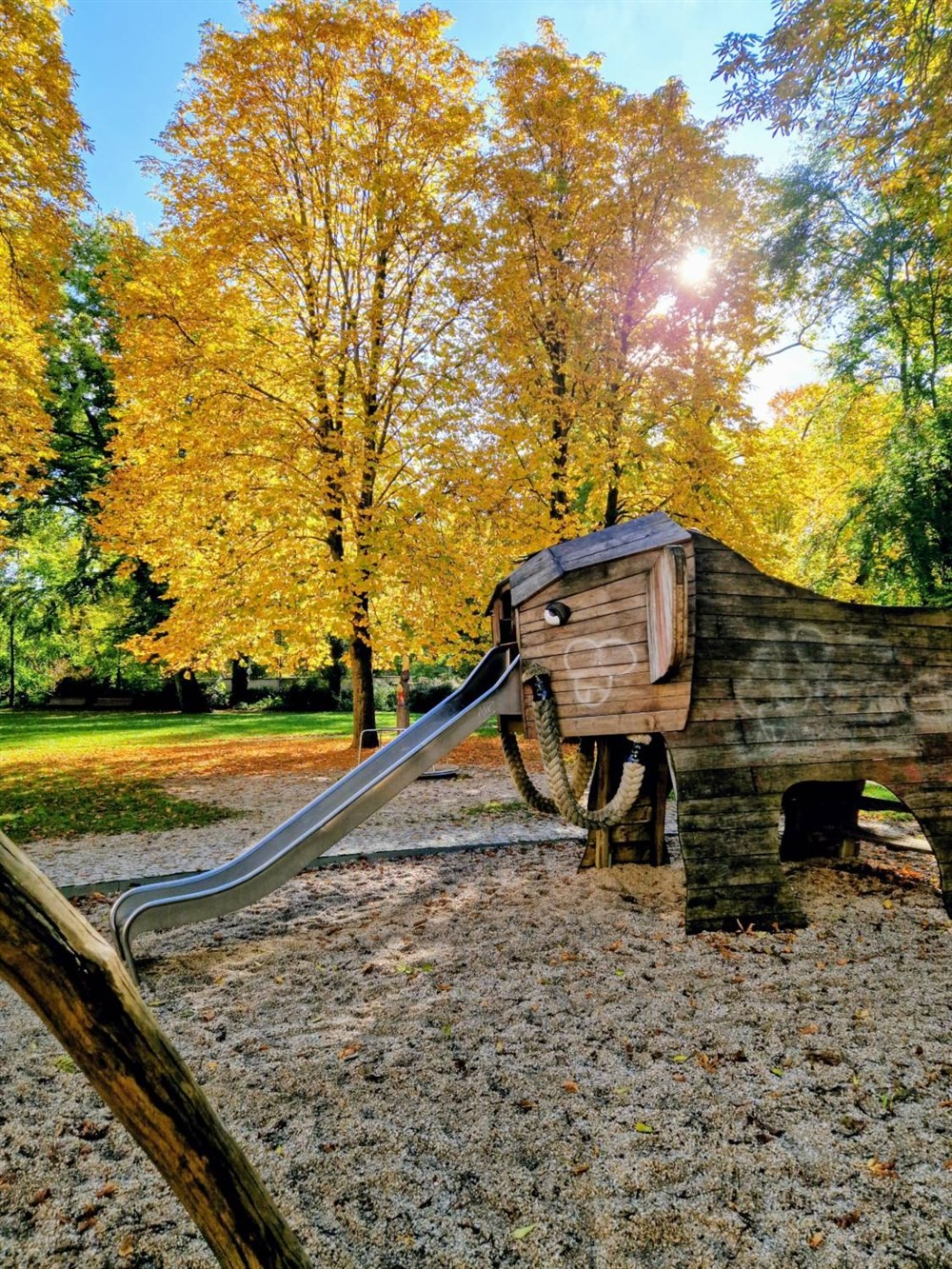
For the younger ones: the Museum of Prehistory and Early History. If you are travelling with smaller children, start Sunday here. The museum at Humboldtstraße 11 shows 400,000 years of Thuringian history, from the Stone Age to the Middle Ages, with skeletons and many finds. Children can join in themselves: the kids' platform "Mach mit, frag Archie!" (Join in, ask Archie!) asks questions to try out, and there are hands-on stations and workshops such as glass bead making. For older children there is a Stone Age rally from age 12. The museum is also a good choice in rainy weather. Right next door is a playground where the people of Weimar still argue about whether it is the mammoth or the elephant playground. Children who want to burn off energy after the museum are in exactly the right place, and you can decide for yourselves who is right. For current opening hours and offers, see alt-thueringen.de.
Then it is on to the modern age. The Bauhaus Museum is a windowless concrete cube with 24 lines of light on the façade that glow in the evening. Children can count them. Inside are furniture, lamps and toys, over 100 years old and still modern. The museum's guiding question comes from Walter Gropius: "How do we want to live together?" It is a good conversation starter, even with teenagers. Bauhaus means: form follows function. The same logic is in your phone and your trainers.
Three basic shapes in three basic colours are still part of the Bauhaus today: the yellow triangle, the red square and the blue circle. Wassily Kandinsky, who taught at the Bauhaus in Weimar from 1922, proposed this pairing. A little game for the road: how many of these shapes can you spot in the city?

Afterwards the neighbouring Weimarhallenpark is a good place to wind down.
End the weekend on Theaterplatz. The Goethe-Schiller Monument shows both men the same size, although Schiller was in fact almost 20 centimetres taller. That was deliberate: the artist wanted to show that they were equals. In the German National Theatre behind it, the first democratically elected National Assembly met from February 1919. Among the 423 delegates were 37 women. On 19 February 1919 Marie Juchacz spoke here as the first woman in a German parliament. Her first words, "Meine Herren und Damen" (Gentlemen and Ladies), were greeted with laughter. She let the men laugh and simply carried on. Ask your children how it feels not to be allowed to vote.
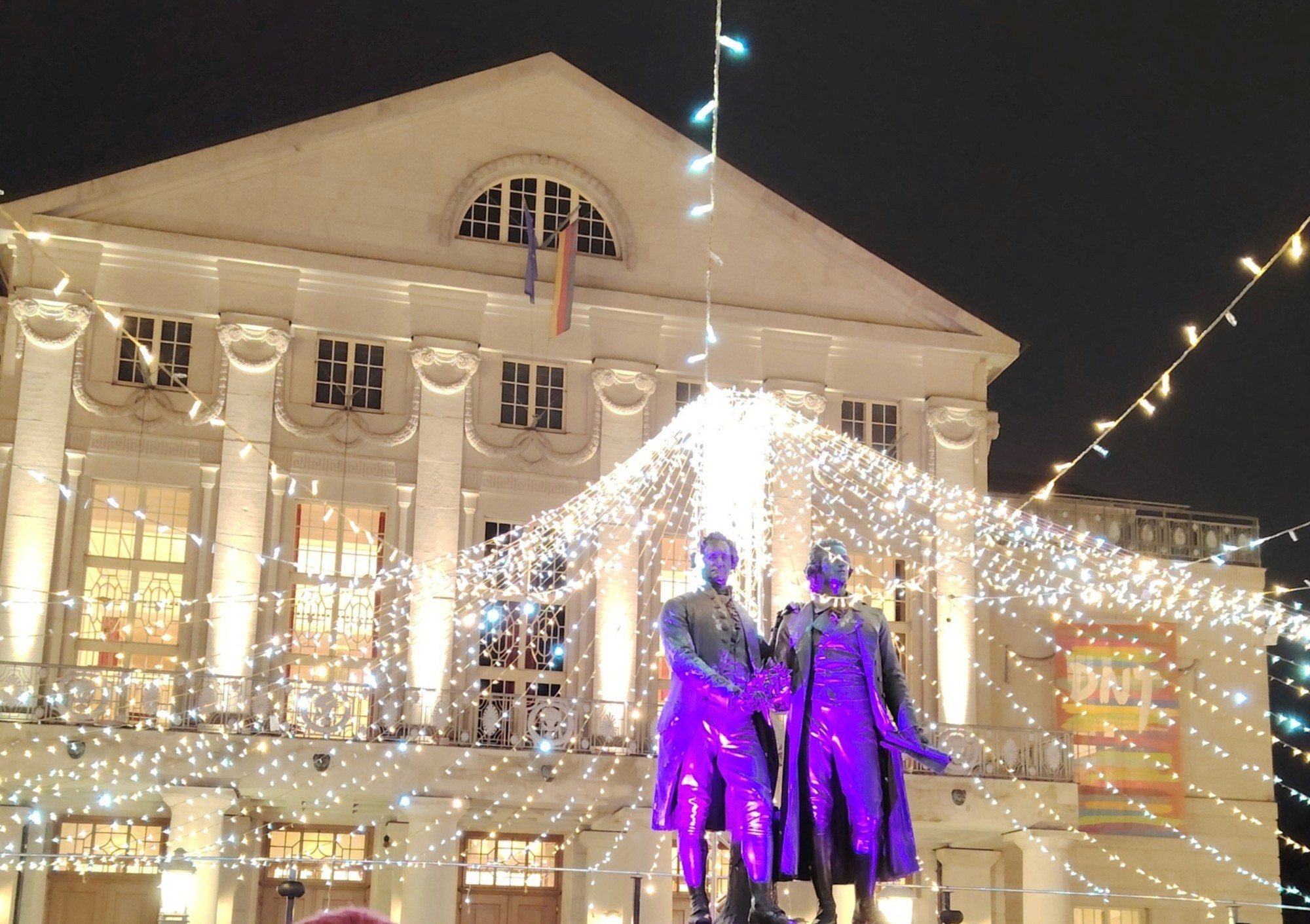
At Christmas time you can even go ice skating around the two of them here.
The City Palace: indoors when it rains, outdoors in summer
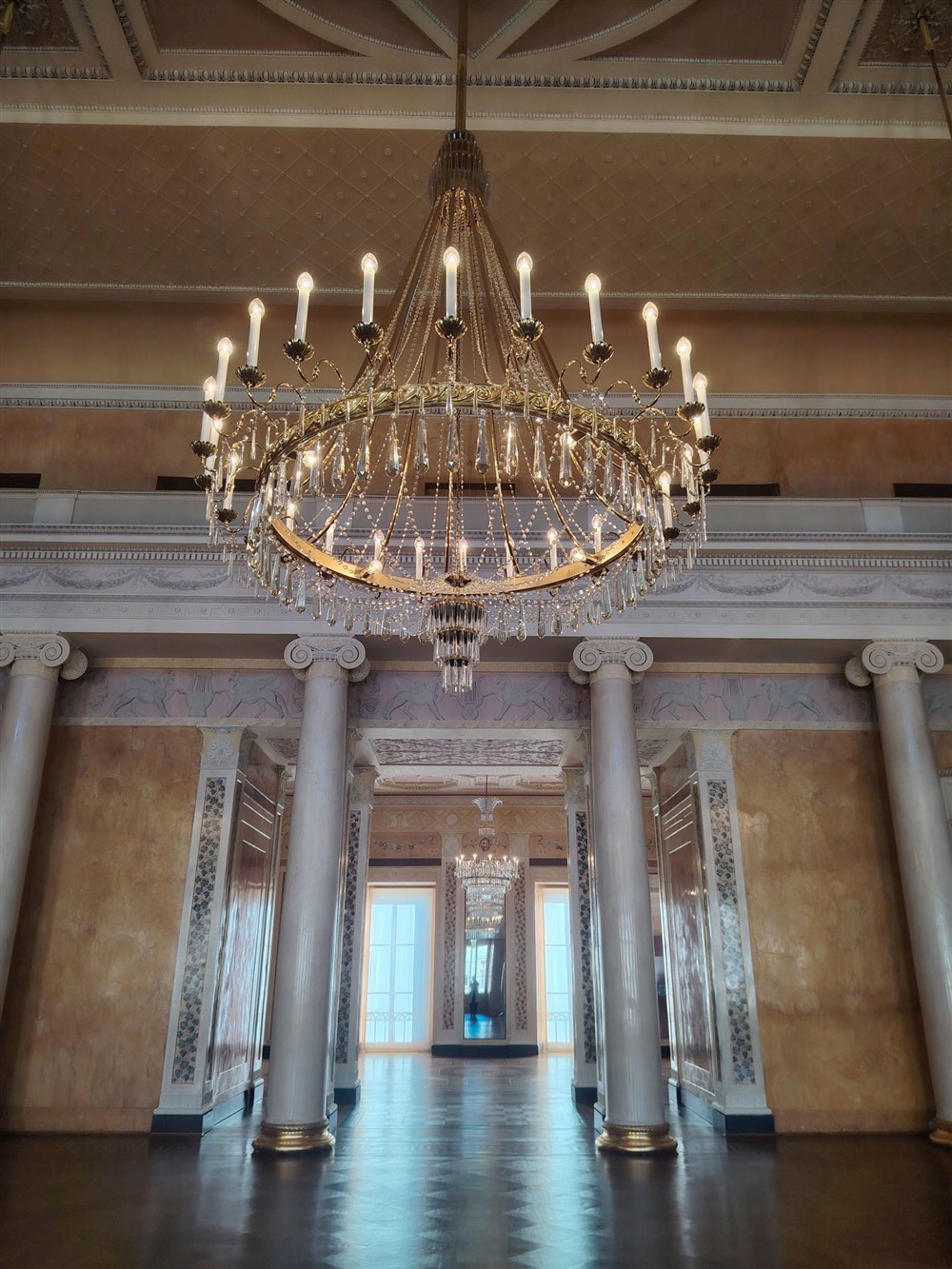
Since 2 October 2026 the City Palace (Stadtschloss) on Burgplatz has been open again after about eight years of renovation, for now the east wing. That makes it a new rainy-day tip in Weimar that also works for families. The halls with their large chandeliers are an experience in themselves. There is also a new permanent exhibition on Weimar Classicism.
For children aged 9 and up there is an audio tour of their own in the Weimar+ app, with puzzles, developed together with the young theatre stellwerk e. V. The palace history exhibition in the foyer and the Schlossforum are free of charge, so a quick look is worthwhile even without a ticket. The palace is open Tuesday to Sunday from 10 am to 6 pm and closed on Mondays. Admission for adults is 8 euros. What children and teenagers pay, check beforehand with the Klassik Stiftung. You can read more about the palace in my article Weimar's City Palace Is Open Again.
If you come in summer, the palace forecourt is yours. Every year the Klassik Stiftung's Open Stage takes place there: free concerts with bands from Weimar and the region, in summer 2026 every Wednesday evening from early June to late July, at the Co-Labor on Burgplatz. There is also a table tennis station that is especially popular with children and teenagers. Instead of an ordinary bat you choose your historical player: the bats show Goethe, Schiller, Anna Amalia, Johann Sebastian Bach and other figures from Weimar's history, sorted into "The Brave", "The Trendsetters" and "The Entertainers". Who wins when Schiller plays Goethe? My tip for a summer evening: get a pizza from Antonios, sit down in the park and listen to the music. You will find the dates of the current season on the Klassik Stiftung website.

Food and breaks
A weekend with children and teenagers only works if you eat well in between. These are my tips:
Fritz Mitte is my tip for teenagers. Young people feel at home here, and the parents get their money's worth too. There is currywurst with fries and sweet potato fries, served with homemade remoulade.
Jelo is the right address for delicious soups, ideal on a cool day after a walk in the park.
Brotklappe bakes great sourdough sandwiches and Zimtknuties (cinnamon knots). Both are perfect as a snack for the park.
Antonios is my address for pizza. In summer it is perfect for an evening in the park at the Open Stage in front of the palace, when the bands are playing.
Biebereis in Windischengasse is my address for an ice cream in between. The little street is worth a detour anyway, and it is best explored with a scoop in your hand. My tip for children and parents alike.
Practical tips
Distances are short. The old town is easy to explore on foot, but plan breaks. The Park an der Ilm is the best place for that.
Less is more. Choose one museum per day, not three. Children remember an experience better than a list.
Goethe's house will soon be closed. From 2 November 2026 for renovation, according to current plans until mid-2029. Before that there is a farewell festival on 31 October and 1 November. The Goethe National Museum with its permanent exhibition and the garden house in the Park an der Ilm stay open. The City Palace reopened in October 2026, more on that above. Current information is available from the Klassik Stiftung Weimar.
Schiller's house: open Tuesday to Sunday, closed on Mondays, shorter hours in winter than in summer.
Check tickets in advance. It is best to check opening hours and timed slots for the museums and the library beforehand with the Klassik Stiftung Weimar.
Two tones of voice. If you have children of different ages with you, briefly tell both versions of a story. Usually everyone listens to both anyway.
If you would like a guided tour
I guide families with children and teenagers aged 6 to 16 through exactly these places. The family tour takes about an hour and a half and costs from 65 euros per family. I tell every stop in two tones of voice, once for the younger ones and once for the older ones. The meeting point is the market square at the town hall. You will find all information and dates on the family tour page.
