Weimar's City Palace Is Open Again: What to Expect in the East Wing
After eight years of construction the east wing is open: Bach's lost court chapel, Goethe as master builder, a bunker beneath the main floor and a ground floor without a ticket.

Since 2 October 2026, Weimar's Stadtschloss (City Palace) has been open again, at least in part. I was there for the opening weekend celebrations and came back a few days later, when the rooms were quieter. Here is what I saw, and everything you need to know for your visit.
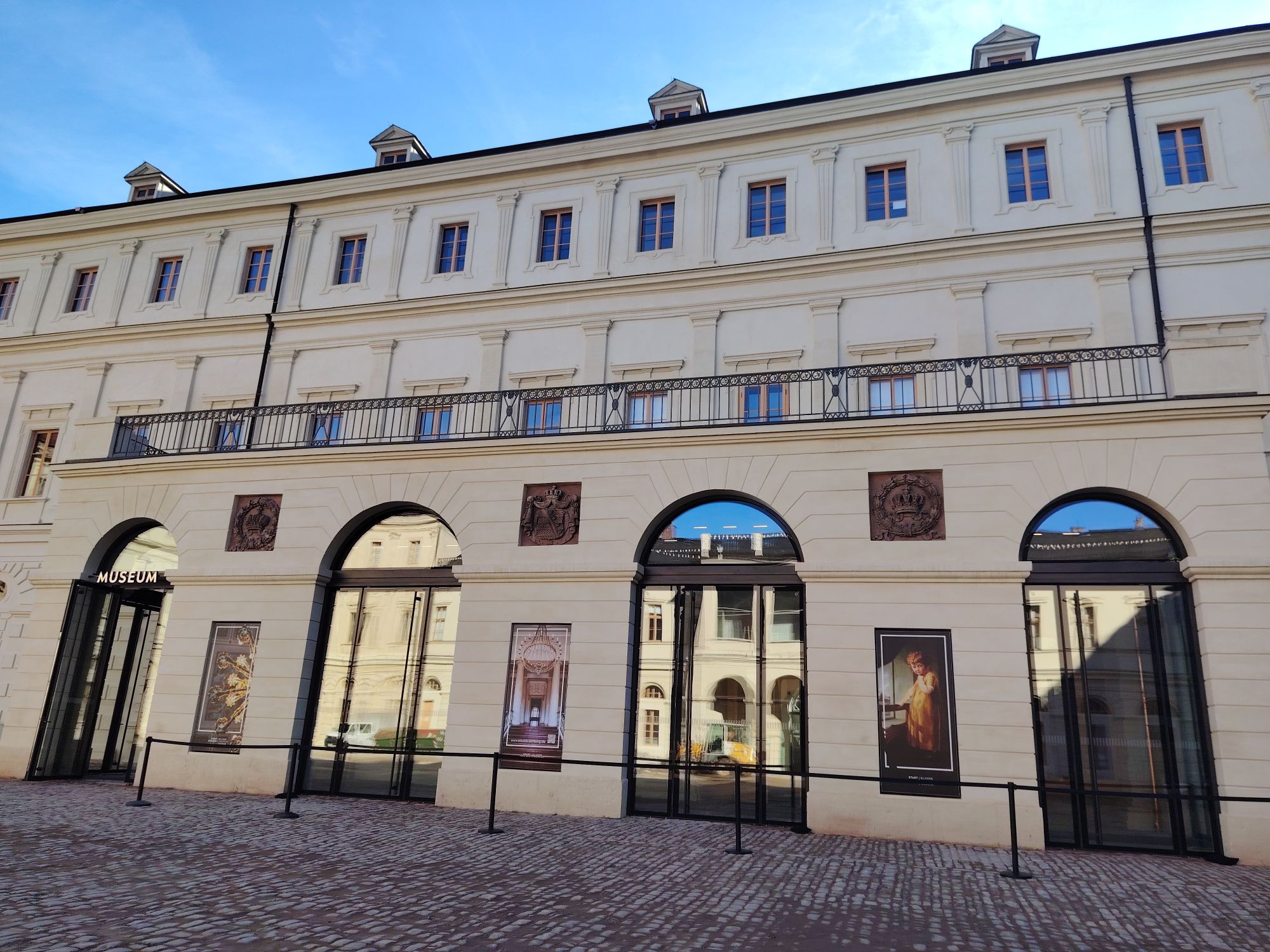
Eight years behind construction fences
Anyone who has walked through Weimar with me in recent years knows the palace on Burgplatz only as a long façade behind construction fences. The renovation of the east wing took around eight years. The federal government and the State of Thuringia are providing 140 million euros to restore the entire palace. The remaining wings will follow step by step, expected by 2032.
A palace that burned down twice
The new foyer exhibition on the palace's history quickly shows how often this building had to start over. In 1618, half the palace burned down, and the town said a careless alchemist was to blame. That is not documented, but the story has stuck.
On 6 May 1774 it burned again, most likely after a thunderstorm. The court chapel, known in Weimar as the Himmelsburg (Castle of Heaven), was lost with it. Johann Sebastian Bach had served there as court organist between 1708 and 1717 and wrote a large part of his organ works. His Weimar years ended badly: when he pressed for his release to move to Köthen, Duke Wilhelm Ernst had him placed under arrest for four weeks.
When rebuilding finally began in 1789, Goethe was involved in the planning. Together with the architect Heinrich Gentz, the neoclassical palace came into being. Its staircase is once again the way up to the main floor, and it is the place that enchanted me most.
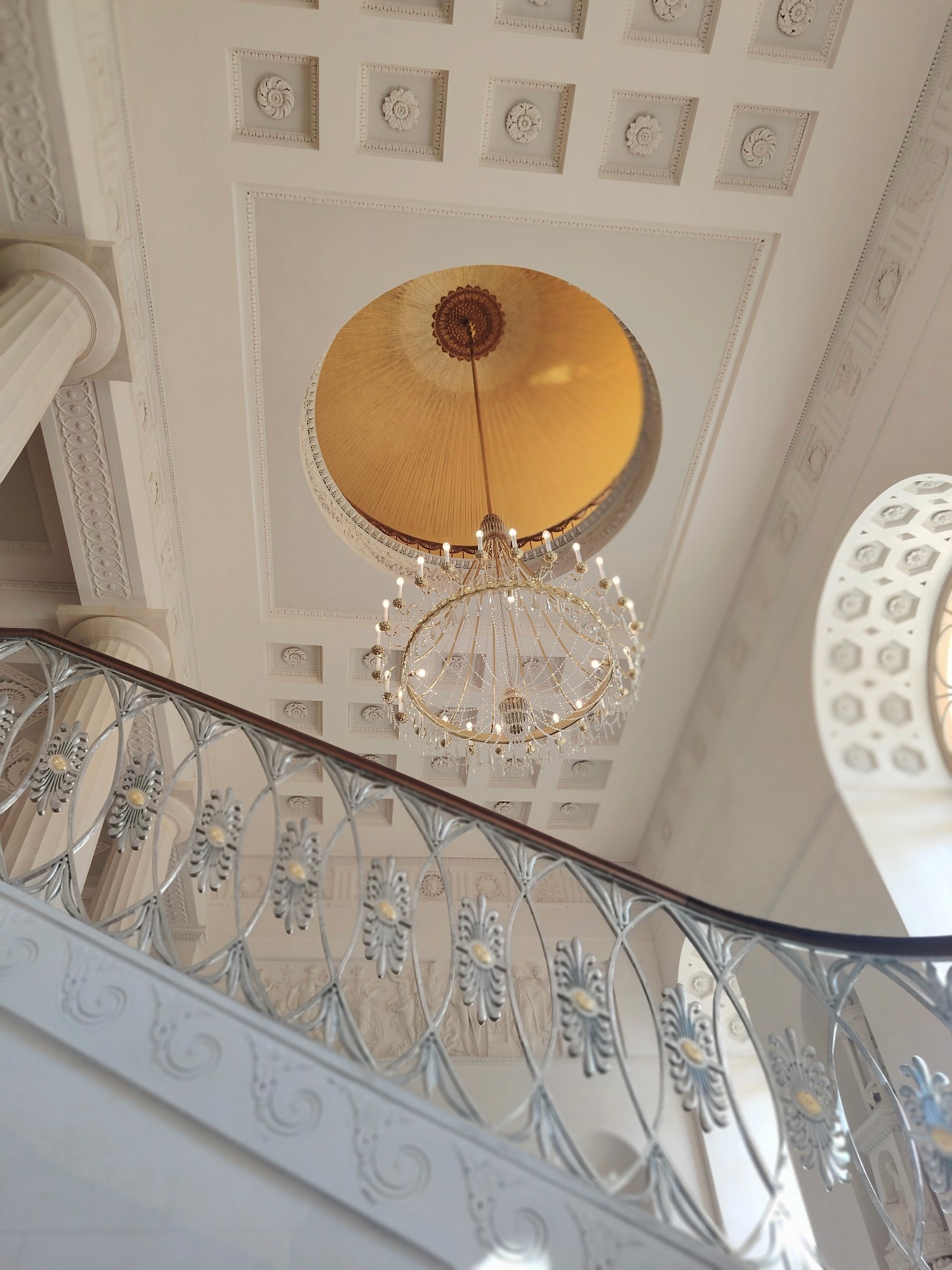
Layers of time instead of polish
The Klassik Stiftung chose not to restore a supposedly perfect state from around 1800. The different eras of the building remain visible: old doors, unrestored walls, traces of many centuries. On top of that come the structural engineering, fire protection and security technology a museum needs today.

Along the way, the building site faced an opponent you cannot see for a long time: dry rot, a fungus that destroys timber. In the dining room, plaster, stucco and paintings had to be removed. Only after the substructure was renewed did conservators put them back.
The history of the palace chapel, consecrated in 1847 and now part of guided tours, is just as eventful. After the war it was deconsecrated and used as a concert hall. From 1964 to 2004 it held a four-storey steel frame full of books from the Duchess Anna Amalia Library. For forty years, the church was a storeroom.
What lies beneath the east wing
The new permanent exhibition "Weimar Classicism" leads through the main floor, the Festsaal (ceremonial hall) and the Falcon Gallery. It asks how the princely court shaped, promoted and politically used the memory of Classicism, throughout the 19th century and into the time of the First World War.
But the palace also has later chapters. In 1919, while the National Assembly met in the theatre, the provisional Reich government used rooms in the palace. In the Nazi era the building served political representation, and from 1943 prisoners of Buchenwald concentration camp were forced to build a bunker complex beneath the east wing. Parts of it have been open to the public for the first time since the reopening. The ceremonial hall above, the bunker below, both in the same building and reachable in a single afternoon.
An open ground floor
Part of the palace costs nothing. The Schlossforum on the ground floor, with its passage, courtyard and Ilm terrace, is freely accessible, as is the foyer exhibition with a model of the palace and medieval archaeological finds. The new visitor centre is in the passage at the Grünes Haus, the oldest part of the palace.
Since 2022, the foundation has accompanied the construction period with the art project "Schloss erzählen" (Telling the Palace), asking among other things: "Who needs a palace today?" One possible answer can be found on the ground floor, in an open place between the old town and the park where you can meet without buying a ticket first.
Practical information (as of 6 October 2026)
Opening hours: Tuesday to Sunday, 10 am to 6 pm
Admission, main floor: 8 euros, reduced 6 euros
Free: Schlossforum, passage, courtyard, Ilm terrace and foyer exhibition
Visitor centre: in the passage at the Grünes Haus
Current information and tickets: from the Klassik Stiftung Weimar
Palace, Goethe and park in one day
The palace sits right between the old town and the Park an der Ilm, which makes a day easy to plan: the main floor and the bunker in the morning, lunch on the Ilm terrace or in the park, then on to Goethe's Garden House in the afternoon. If you still want to see Goethe's residence on Frauenplan from the inside, hurry: it closes for renovation on 2 November 2026. A farewell festival takes place on 31 October and 1 November beforehand.
Experience the palace with me
On my old town tours I like to linger at the palace, because of Bach, because of Goethe as master builder, and because of the question whose story a building actually tells. Now I can send my guests inside after the tour again. You can find all tours, dates and booking under Tours.
