The Perfect Day in Weimar
From the market square through the Park an der Ilm to Theaterplatz: a route for a perfect day on foot through Weimar.

Weimar has around 65,000 inhabitants, smaller than some districts of Berlin. Even so, four centuries of history fit into a single day here: the Reformation, Weimar Classicism, the first German democracy and the Bauhaus, all reachable on foot within a few kilometres. Anyone with only one day will find a route here that shows exactly that.
Morning: market square and town hall
The day is best started on the market square. The neo-Gothic town hall of 1841 has a carillon of 35 Meissen porcelain bells that sounds several times a day. Diagonally opposite stands the Cranach House: this is where Lucas Cranach the Elder, a personal friend of Martin Luther, spent his last years. And then the eye falls on a car park that looks unremarkable at first glance. Exactly there stood, until 1989, the only Bach residence in Germany whose location is documented in the archives, and two of his most famous sons were born there. Sometimes a gap tells more than a building.

Late morning: from Platz der Demokratie to the ginkgo
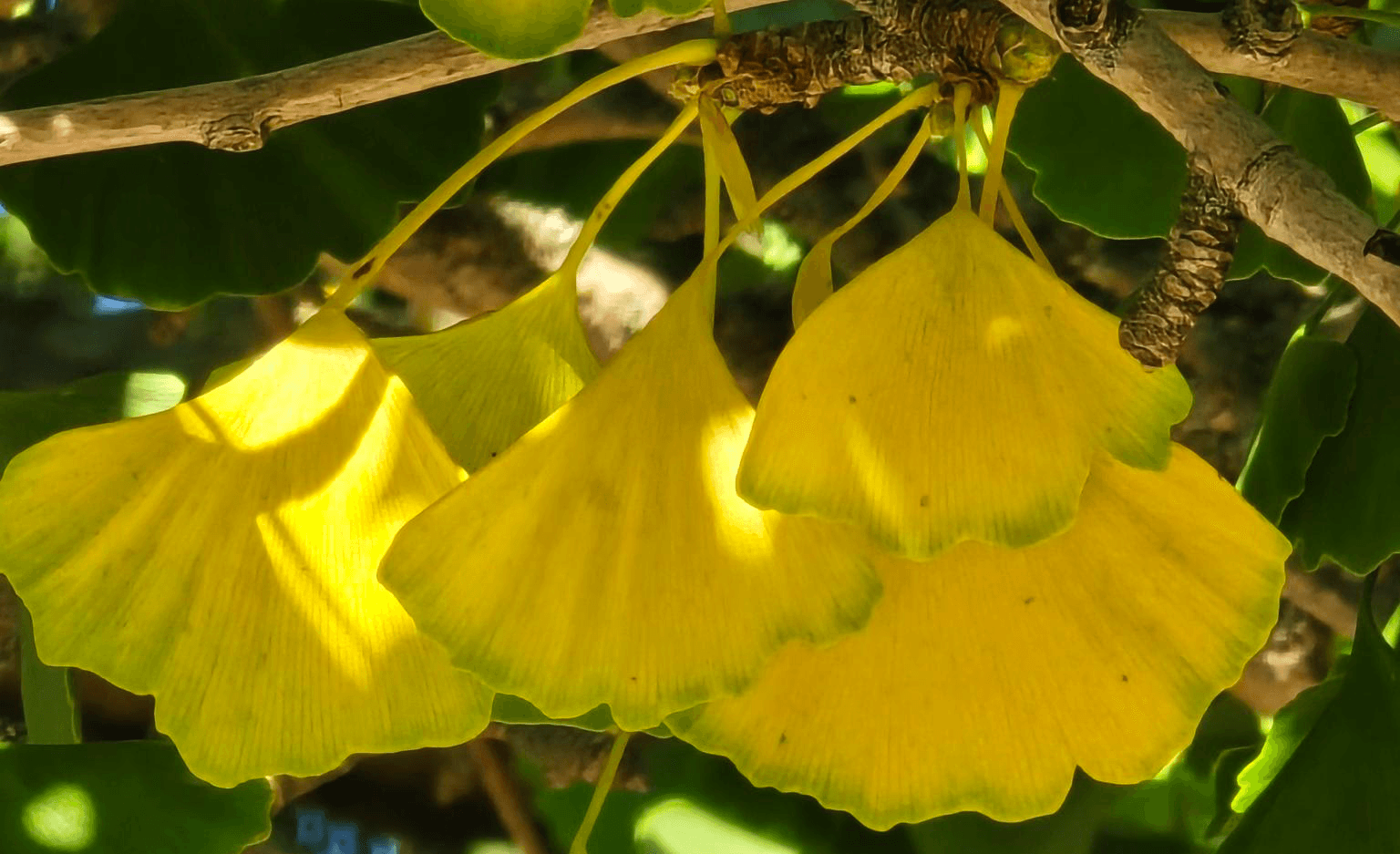
A few steps further is Platz der Demokratie with the Fürstenhaus, the Red Palace and the Duchess Anna Amalia Library. It bears its name rightly: in 1816 Weimar became the first German state to receive a constitution with guaranteed freedom of the press, a legacy that, more than a hundred years later, tipped the balance for proclaiming the first German republic here. From there it is not far to the ginkgo tree, planted around 1815 and now a protected natural monument. Goethe’s famous poem “Gingo biloba” was not written here, but another, persistent tradition was born: anyone who finds a split ginkgo leaf in autumn is said to have luck in love.
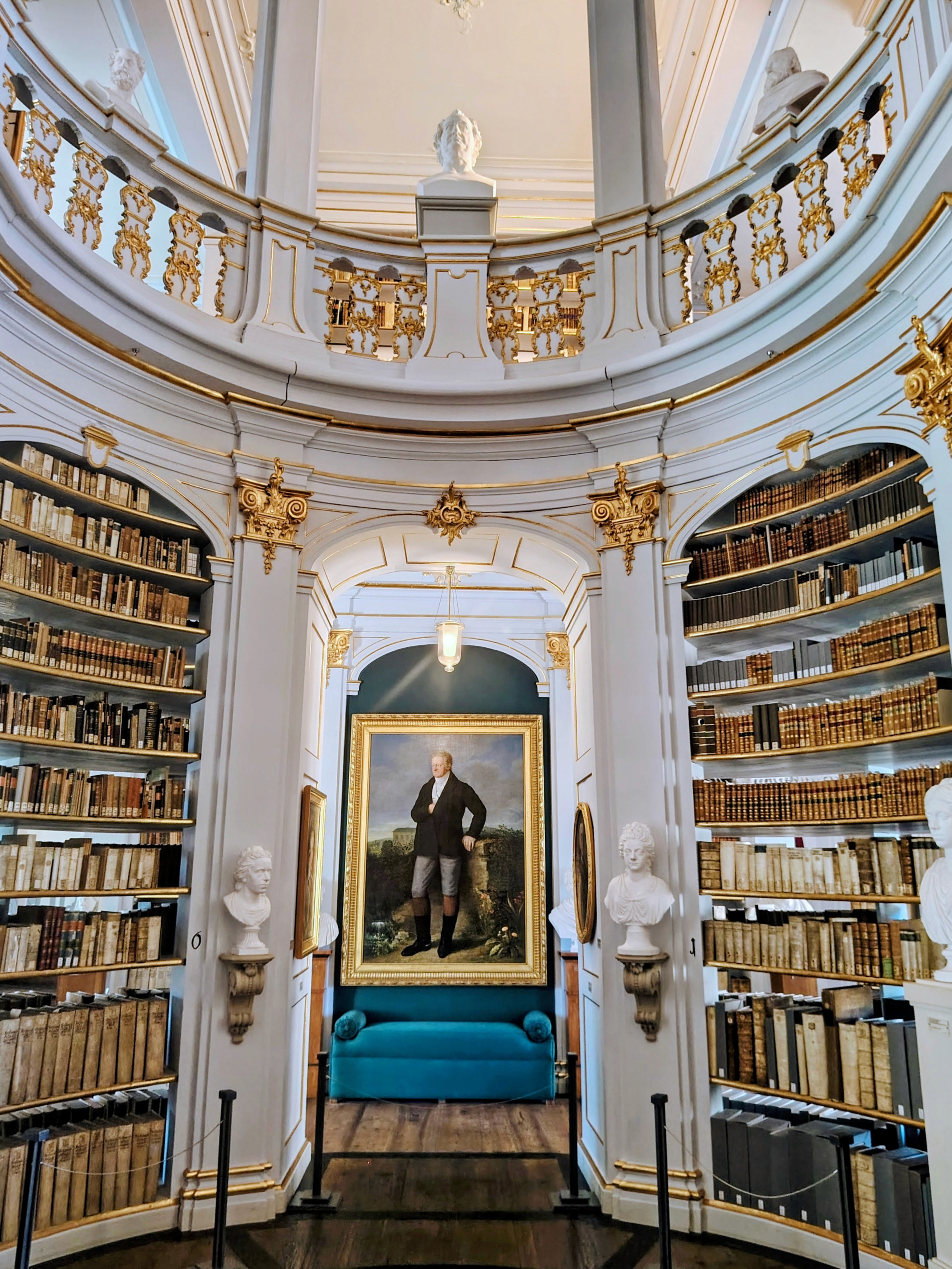
A detour is worthwhile: the Rococo Hall of the Duchess Anna Amalia Library, one of the most beautiful library rooms in the world, can only be visited with a timed ticket. It is best to reserve online in advance via the Klassik Stiftung Weimar, as places are limited and often go quickly.
Midday: a break in the Park an der Ilm
The park itself, an English landscape garden of 58 hectares and UNESCO World Heritage since 1998, is the ideal place for a long lunch break. If you like, follow the path to Goethe’s garden house, his first own residence in Weimar, or to the Nadelöhr, a narrow rock staircase that Goethe had built after the death of a young lady-in-waiting. At the Tempelherrenhaus, a romantic ruin, the Bauhaus teacher Johannes Itten later held daily breathing exercises, long before it was called wellness.

For lunch there are a few regular addresses in Weimar: a soup at Jelo, a crêpe at the Crêperie or a wonderfully topped sourdough sandwich at the Brotklappe. All three are on the way back into town and quick enough for a break between two stops.
Afternoon: visiting Goethe and Schiller
Back in town, the two houses of the poet friends are worth a visit. In Goethe’s house on the Frauenplan, his home for 50 years, Christiane Vulpius ran the household for almost 25 years and had to use a hidden side staircase to do so. The museum is closed from November 2026, but a look at the facade is still worthwhile. In Schiller’s house, only a few metres away, “Wilhelm Tell” was written, reportedly with the help of rotten apples that Schiller kept in his desk drawer while writing.
For a break in between: a coffee in the Künstlergarten right on Theaterplatz, or, a personal favourite, in the café in the garden of the Kirms-Krackow House on Jakobstraße, one of the few originally preserved middle-class gardens from the Goethe era.
Evening: Theaterplatz
The day ends where Goethe and Schiller still stand side by side: in front of the German National Theatre, cast in bronze and deliberately shown at equal height. Here in 1919 the National Assembly met and passed the first democratic constitution of Germany. The Social Democrat Marie Juchacz opened her speech then with four words, “Meine Herren und Damen” (“Gentlemen and ladies”), the first speech by a woman in a German parliament in this form. A good moment for an evening walk at dusk, before dinner at one of the restaurants in the old town.
If you would like to let the evening wind down: the cultural centre mon ami on Goetheplatz and the Lichthauskino both show a programme away from the mainstream, an atmospheric end to a day between Classicism and the present.
My tip
All these places can also be walked on your own. Anyone who would like to hear the stories behind them told live will find exactly this route in the tour “Weimar Complete”, supplemented by many further details that cannot be read anywhere. The tour pages also offer shorter and more thematically focused variants, such as the Park Walk or the Short Tour for anyone with less time. And if you would like to follow Marie Juchacz and the other women behind Weimar’s history, Strong Women in Weimar is the tour for you.
